Introduction
As the world of software development evolves, microservice architecture has gained immense popularity for building scalable, flexible, and maintainable applications. However, the complexity of managing microservices communication poses significant challenges. Enter the service mesh, a powerful solution that simplifies and enhances microservices communication and observability. In this blog post, we will explore what a service mesh is, why it’s crucial for microservices architecture, and how it shapes the future of application communication.
Understanding Service Mesh
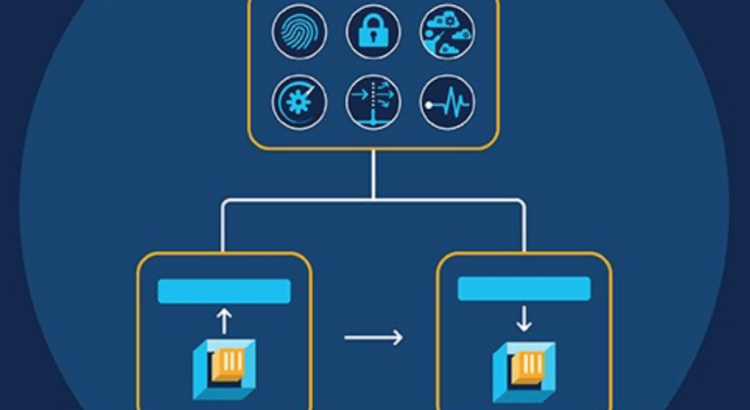
A service mesh is a dedicated infrastructure layer that handles the communication between microservices within a distributed application. It consists of a set of interconnected proxy servers (also known as sidecars) deployed alongside each microservice instance. These proxies manage the traffic flow, enforce policies, and collect telemetry data without adding any application code.
Key Features and Benefits
- Traffic Management: Service Mesh provides advanced traffic management capabilities, including load balancing, retries, timeouts, and circuit breaking. This ensures resilient and efficient communication between microservices.
- Security: With mutual TLS encryption and authentication, service mesh enhances the security of microservices communication, safeguarding data and preventing unauthorized access.
- Observability: Service mesh collects valuable telemetry data, such as latency, error rates, and request/response times, enabling better observability and troubleshooting.
- Dynamic Configuration: Service Mesh allows for dynamic configuration updates without requiring microservices to be redeployed, providing greater agility and flexibility.
- Service Discovery: Service mesh automates service discovery, eliminating the need for manual configuration and ensuring seamless communication between microservices.
Service Mesh Implementation
Two popular service mesh implementations are Istio and Linkerd:
-
Istio: Istio is an open-source service mesh platform built on top of Kubernetes. It provides powerful traffic management, security, and observability features for microservices.
-
Linkerd: Linkerd is another open-source service mesh designed to be lightweight and focused on reliability. It offers transparent proxying and observability capabilities.
Service Mesh and Microservices Architecture
-
Decoupled Communication: A service mesh allows microservices to communicate with each other in a loosely coupled manner, promoting modularity and maintainability.
-
Resilience and Fault Tolerance: Service mesh enhances the resiliency of microservices by handling retries, timeouts, and circuit breaking. It helps isolate failures and prevent cascading issues.
-
Dynamic Scaling: With service mesh, scaling microservices becomes more manageable, as the proxy layer automatically adapts to the changing demands of the application.
-
A/B Testing and Canary Deployments: Service mesh facilitates A/B testing and canary deployments by enabling controlled traffic shifting between different microservice versions.
The Future of Microservices Communication
Service mesh is rapidly becoming the standard approach for managing microservice communication and observability. Its ability to address the challenges of distributed systems and provide essential features like traffic management, security, and dynamic configuration makes it a critical component in modern application architectures.
As microservices adoption continues to grow, service mesh will play an even more significant role in enabling developers to build and operate large-scale, resilient, and efficient applications. It empowers development teams to focus on business logic while leaving communication and observability concerns to the service mesh infrastructure.
In conclusion, the service mesh is revolutionizing microservices communication, making it more reliable, secure, and observable. As organizations embrace microservices architecture, service mesh will continue to shape the future of application development, enabling seamless communication and robust operations in the dynamic world of software engineering.